Blog Feed

Proceedings from E-textiles 2024 published

Four peer reviewed proceedings based on work presented by the group at the E-Textiles 2024 conference have recently been published as part of the conference’s proceeding on IEEE Xplore.

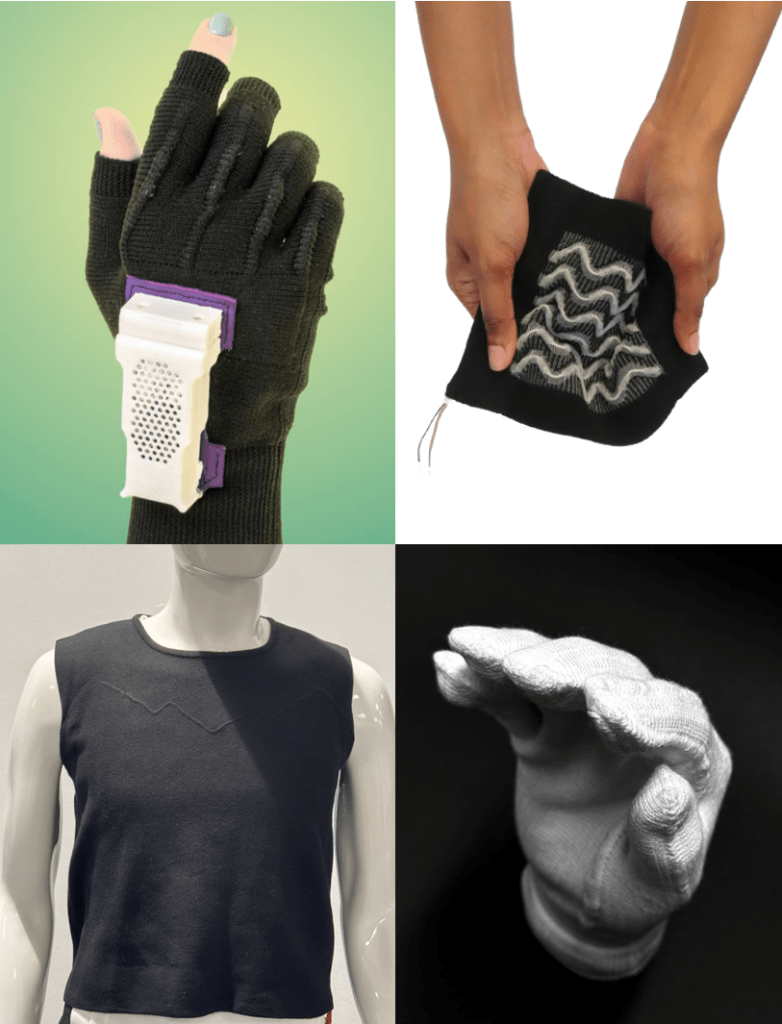
Vibrotac-Glove: Designing a Novel Haptic Glove as an Assistive Device’ describes a glove made with yarn-embedded haptic actuators. The work tests a glove prototype with health volunteers to understand how they perceive different haptic signals. The work also explores the refinement of the glove design based on the human trials and other important considerations such as sustainability.

Further Optimization of Solar Electronic Yarns for Developing Large, Stretchable Knitted Textile Solar Panel’ introduces a textile solar panel created using solar cell embedded E-yarns that is both stretchable and breathable. The work overviews some key design work that led to the panel, as well as presents its characterisation, including electrical performance, stretch, and breathability.

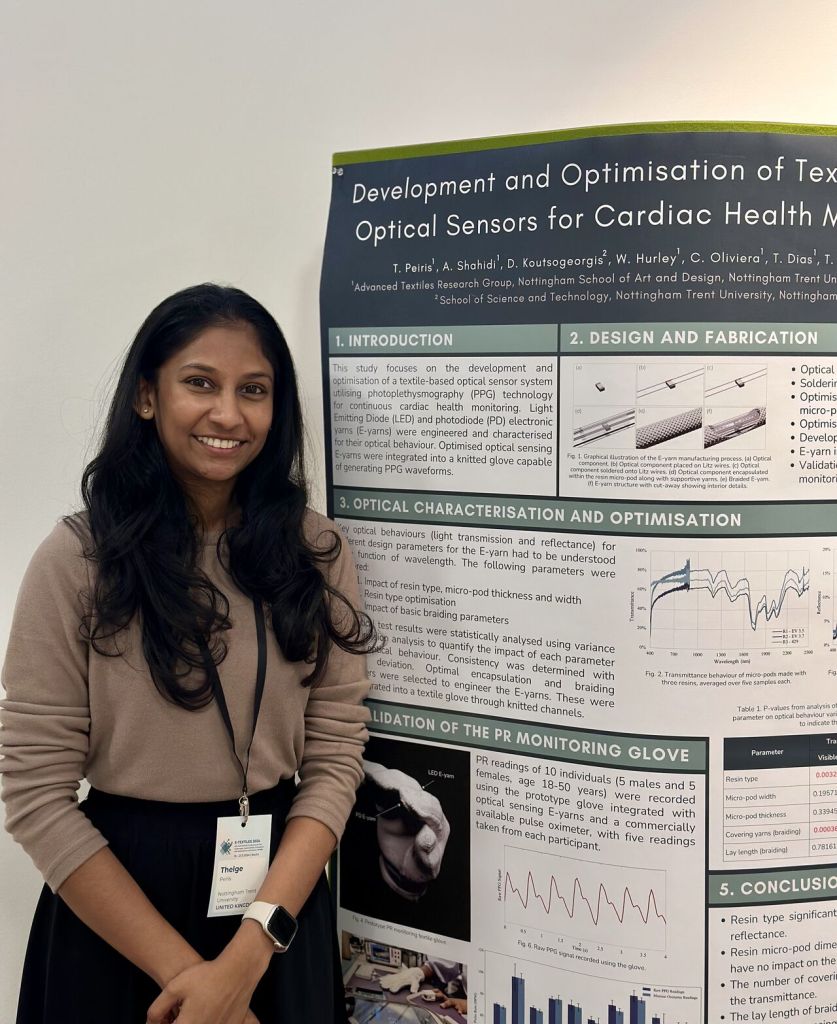
Development and Optimisation of Textile-Based Optical Sensors for Cardiac Health Monitoring’ presents a pulse rate measuring glove. The proceeding builds on earlier work by the group and develops a new glove utilising E-yarns created using the method developed in the ‘Manufacturing Electronic Yarns’ project. The glove was tested with health human subjects proving the efficacy of the design. This proceeding is linked to the work that led to Mrs Peiris winning the best student poster award at the conference.

Finally, ‘The design and development of a temperature sensing vest for the monitoring of on-body skin temperature’ presents a temperature sensing vest that was designed to replace the need for skin-mountable thermistors for understanding thermoregulation. A fairly close relationship between the temperature sensing E-yarns and skin-mounted thermistors was observed, and trends in skin temperature changes could be seen using the E-yarns in most cases.

Article on ‘Submersible touchless interactivity in conformable textiles enabled by highly selective overbraided magnetoresistive sensors’ published

The Advanced Textiles Research Group in collaboration with the School of Science and Technology at Nottingham Trent University (UK), Helmholtz-Zentrum Dresden-Rossendorf (Germany), and the Free University of Bozen-Bolzano (Italy) have published a new article. The paper is entitled ‘Submersible touchless interactivity in conformable textiles enabled by highly selective overbraided magnetoresistive sensors’ and details the development and application of a magnetic field sensing electronic yarn. The article was published in Communications Engineering and is available here.

Design considerations for the creation of electronic yarns for wearable health monitoring devices

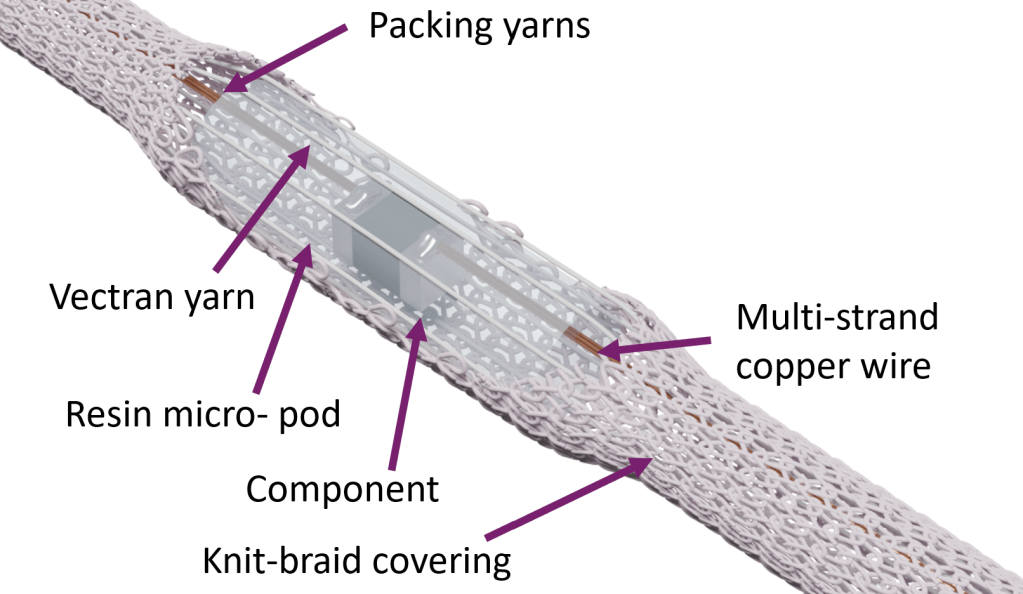
The Advanced Textiles Research Group, and other staff in the Nottingham School of Art and Design, have published a new research article focussed on the challenges in designing a robust electronic yarn suitable for wearable applications. The article details the challenges with certain E-yarn designs and explores how these limitations were overcome. Further, the work provides a detailed insight into how different braiding materials and parameters can affect the overall coverage of embedded components. The new E-yarn design was a key outcome of the ‘Production engineering research for the manufacture of novel electronically functional yarns for multifunctional smart textiles’ project and informed decisions regarding the automated production process of these E-yarns.

The article is entitled ‘Design considerations for the creation of electronic yarns for wearable health monitoring devices’ and was published in ‘The Design Journal’: The article is available here.

innoLAE 2025

Kalana Marasinghe, Research Fellow in Electronic Yarns, is currently attending the innoLAE 2025 conference in Cambridge (UK).

Later today he will present his work on ‘Approaches toward the manufacturing of electronic textiles created using electronic yarns.’ The presentation will overview key developments in the manufacturing of electronic yarns and will detail the methods currently employed in their production.

Article on using Human Centred Design to Create E-Textiles

A new research article exploring the use of a human centred design approach to develop a fall detection garments for older women has recent been published. The authors, Zahra Rahemtulla, Rachael Wickenden, and Theo Hughes-Riley, detail a study where older women were interviewed about their views on clothing, technology and falls to design fall-detecting E-textile concepts. Women were then invited to participate in a workshop to help gain a deeper insight and refine the garment design.

This work informed the design of the fall and near-fall detecting over-sock previously trialled and validated in the article ‘The Design and Engineering of a Fall and Near-Fall Detection Electronic Textile’ which is available here.

This new article is entitled ‘Using a human centred design approach to develop a fall detection sock for older women’ and is published in Design for Health. The article is available here.

E-textiles 2024

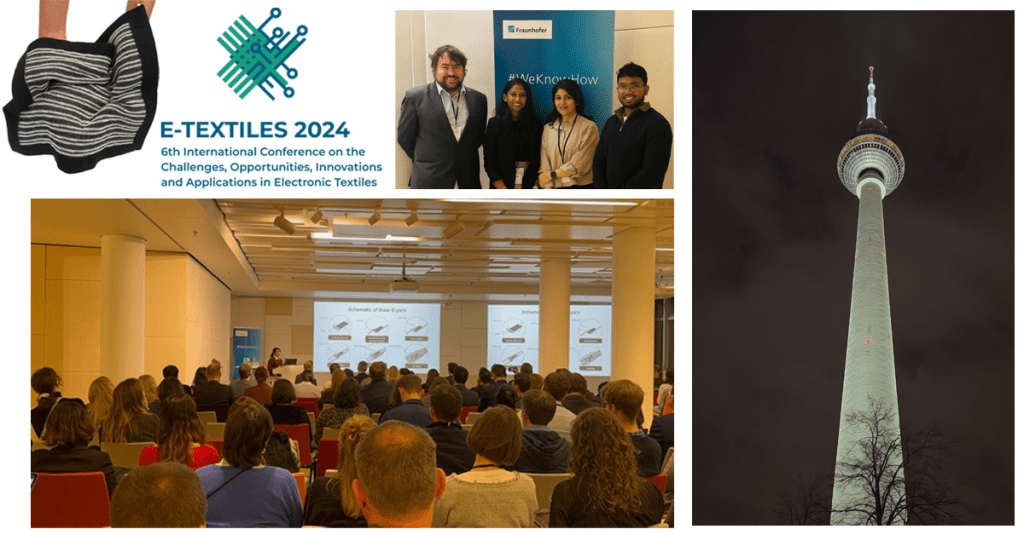
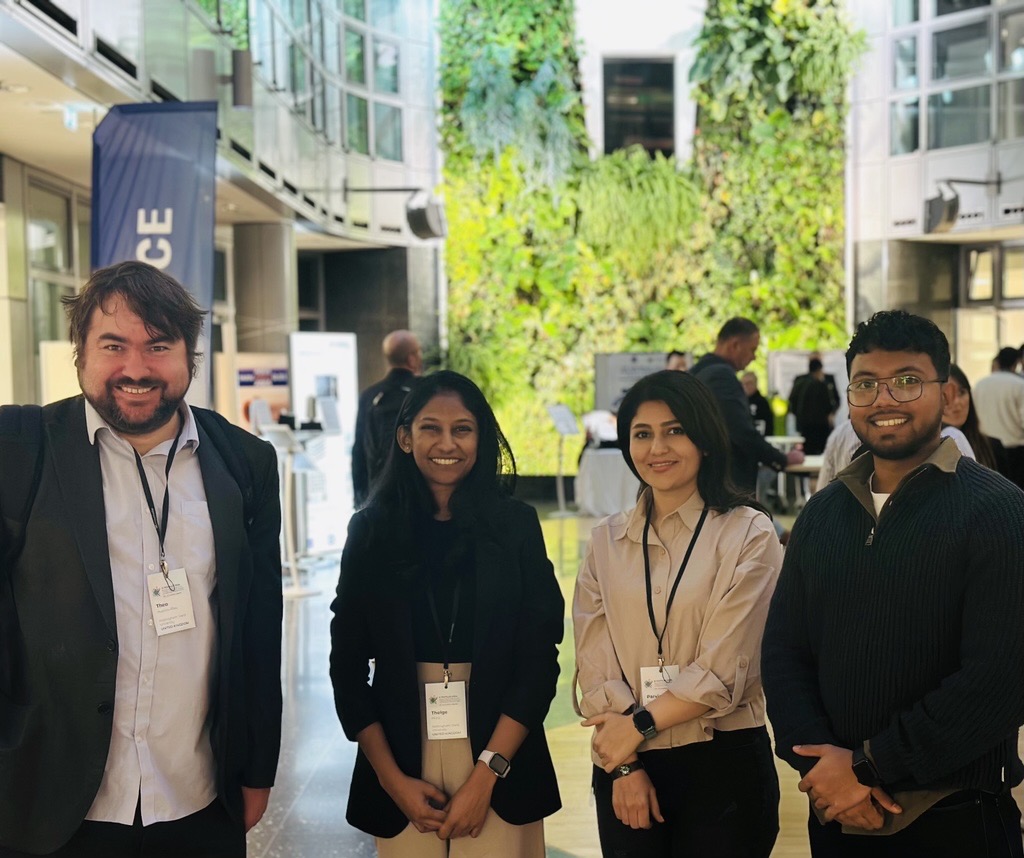
Members of the Advanced Textiles Research Group have recently presented work in Berlin (Germany) at the ‘6th International Conference on the Challenges, Opportunities, Innovations and Applications in Electronic Textiles (E-textiles 2024)’. The team included Thelge Peiris (2nd year doctoral candidate), Parvin Ebrahimi (3rd year doctoral candidate), Malindu Ehelagasthenna (3rd year doctoral candidate), and Theo Hughes-Riley (associate professor). Ms Ebrahimi and Mr Ehelagasthenna both gave oral presentation, while Mrs Peiris and Dr Hughes-Riley presented posters.

All of the presented work involved E-yarn developments. The following work was presented:

Development and Optimization of Textile-Based Optical Sensors for Cardiac Health Monitoring (poster)

The design and development of a temperature sensing vest for the monitoring of on-body skin temperature (poster; Kalana Marsinghe first author)

Vibrotac-Glove: Towards the Development of Advanced Haptic Textiles for Enhancing Deaf-Blind Interactions (oral presentation)

Further Optimization of Solar Electronic Yarns for Developing Large, Stretchable Knitted Textile Solar Panels (oral presentation)

Full, peer-reviewed proceeding articles linked to this work will be published shortly.

A highlight of the conference was Mrs Peiris winning the best student poster award for her work on optical sensing.

Exploring Sustainable Approaches for Electronic Textile Products and Prototypes

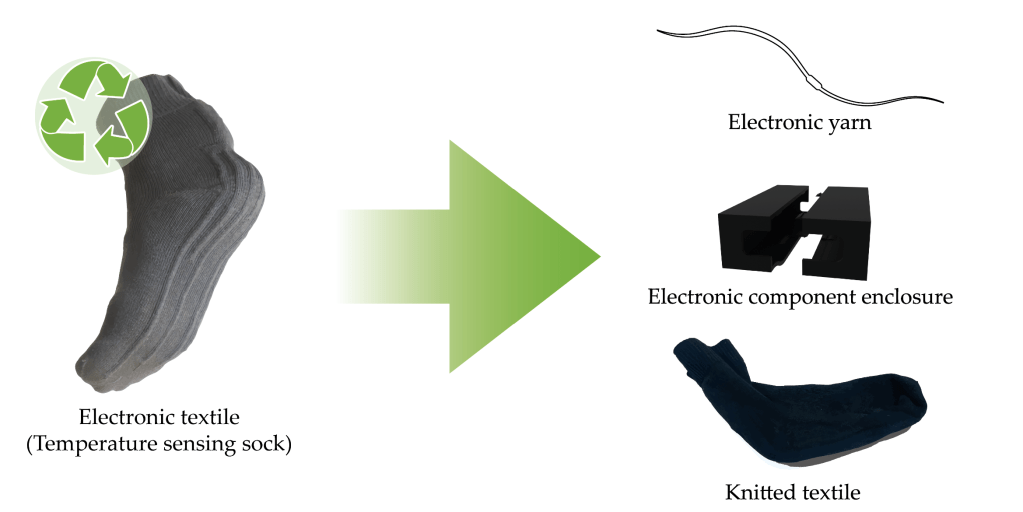
The ATRG and other staff members from the Nottingham School of Art and Design have published a new research article exploring approaches to evaluate and improve the sustainability of E-textiles. The article, ‘Exploring Sustainable Approaches for Electronic Textile Products and Prototypes‘, details an examination of three commercial products as well as a prototype created using E-yarn technology. This knowledge is highly important for us to ensure that E-textiles produced using E-yarns are as sustainable as possible, and the article provides a methodology that can be applied during the design of new E-textile prototypes to ensure that good sustainable practises are adhered to. The article is available here.

Visiting Scholar

Raphael Kanyire Seidu has been visiting the Advanced Textiles Research Group from Hong Kong Polytechnic University for the past four months. He has been working on completing smart interactive retro-reflective clothing for pedestrians. This work is part of his PhD research which is focussed on designing garments to improve the safety of pedestrians when walking at night. More information of his research can be found here.

New Electronic Textile Review Articles Co-Authored by Members of the Team

Member of the research team have recently co-authored two review articles with collaborators.

The first review entitled “Structural design of light-emitting fibers and fabrics for wearable and smart devices” was published in Science Bulletin in May. The work discusses recent developments in the design of light-emitting fibers and fabrics. The review was co-authored with collaborators from State Key Laboratory for Modification of Chemical Fibers and Polymer Materials at Donghua University (China). The review can be found here.

A second review, “Fibres—threads of intelligence—enable a new generation of wearable systems” was published this month in Chemical Society Reviews. This article is focussed on electronic smart fibres and covers both the principles behind these devices as well as applications. The review was co-authored with collaborators from State Key Laboratory for Modification of Chemical Fibers and Polymer Materials at Donghua University and the School of Electrical and Electronic Engineering at Nanyang Technological University (Singapore). The review is available here.