P. Ebrahimi , A. M. Shahidi, D. Koutsogeorgis, C. Oliveira, J. Kaner, T. Dias, T. Hughes-Riley
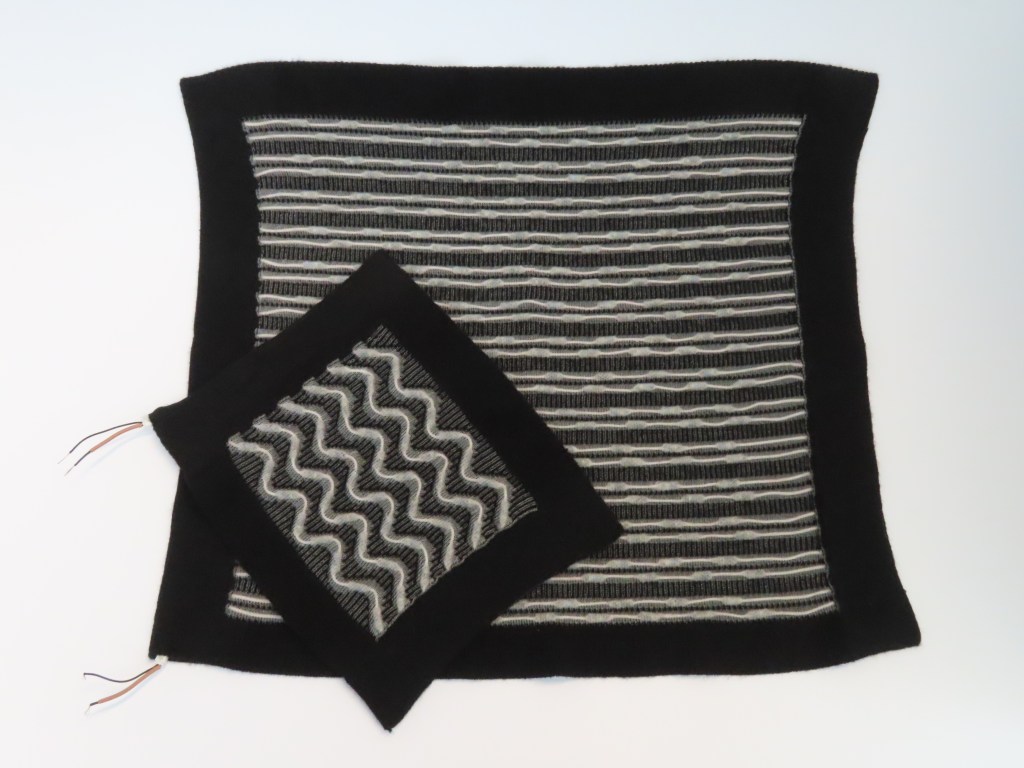
Energy harvesting methodologies offer a solution for powering portable, wearable electronic devices, with the sun standing out as one of the best sources, helping to avoid the need for bulky and heavy batteries.
These knitted solar panels are made by integrating miniature solar cells (2 × 5 mm) into yarn using electronic yarn (E-yarn) technology. A panel measuring 30 cm by 30 cm, comprising 252 solar cells, can harness almost 200 milliwatts of electrical energy from the Sun. The swatch with the wavy pattern, which is stretchable in both dimensions, contains 48 solar cells capable of generating 60 milliwatts of power. Textile solar panels have diverse applications, ranging from indoor uses like curtains to outdoor applications such as tents, or even integrated into clothing like jackets or accessories like backpacks.

Parvin Ebrahimi is a second-year doctoral candidate specializing in solar electronic textiles, focusing on characterization, optimization, and power management. She has developed this new textile solar panel as part of her research. She is a member of the Advanced Textiles Research Group at Nottingham Trent University, United Kingdom.
The ATRG have previously published a wealth of work on textile solar panels. Key publications include:
 Manufacturing Electronic Yarns