What is this project about?
This project seeks to explore using cotton and cotton blend textiles to create electronic textiles (E-textiles). Cotton is an ideal material to create worn E-textiles due to its comfort and consumer acceptance.
This work will explore different techniques to integrate electronics with cotton-based textiles to provide a guide for researchers and industry on how to successfully utilise cotton and cotton blends in creating new, innovative, E-textiles.
The project has four key areas of interest: Manufacturing, resultant textile properties, user perception, and functionality.
Over the course of the project sixty-three different types of E-textile (seven integration techniques combined with nine cotton or cotton-blended materials) will be investigated.
This research was funded by the Cotton Research Trust (https://cottontextilesresearchtrust.org/).
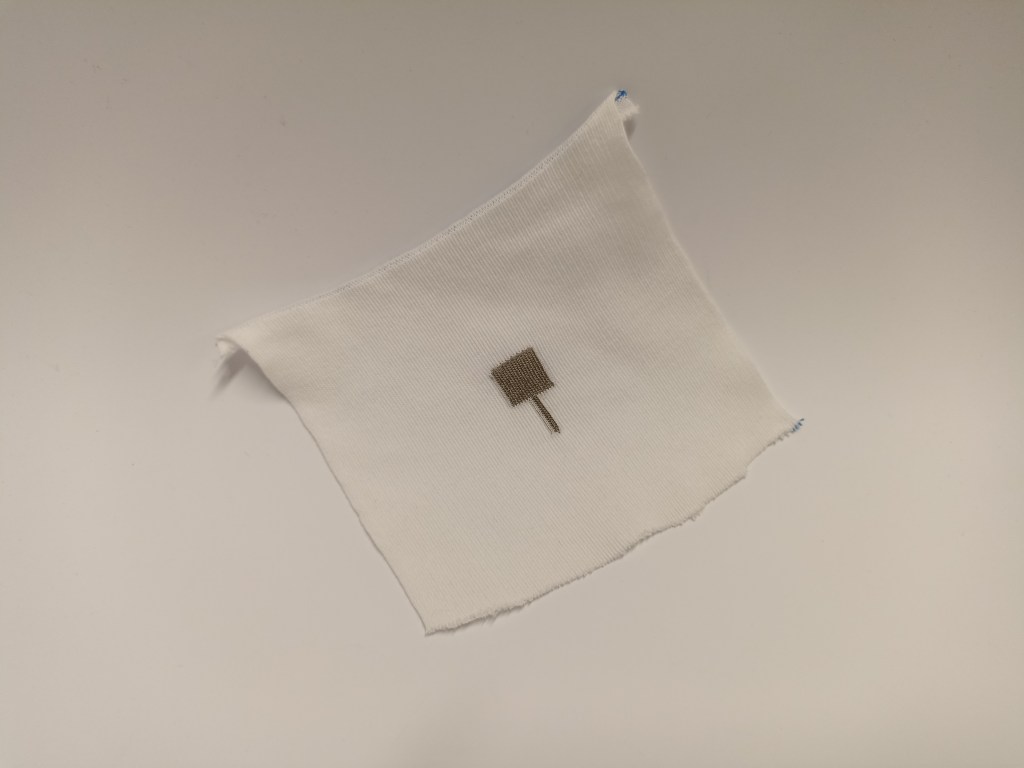
Knitted textile electrode with a cotton base created by Carlos Oliveira.
What is the context?
Historically, cotton received limited attention in the academic E-textiles literature and the rationale for the selection of cotton when it was used was often unclear. In recent year there has been an increasing interest with cotton being employed as a material to coat with conductive material (as fabric and yarn), print onto, or as another component in the overall textile (i.e. a structure in which the electronics are held), however cotton has predominantly appeared in literature regarding new material formulation.
This work focusses on systematically exploring the use of different cotton and cotton blend yarns and textiles to incorporate electronics with established integration methods.
What are you exploring?
The project focusses on four key areas:
Manufacturing: How easy is it to work with particularly cottons and cotton blends? Are there any challenges? What are key parameters to allow someone else to replicate these electronic textiles?
Properties: Properties key to user comfort will be quantified and compared. These include air permeability (how breathable is the textile), heat transfer properties, and moisture absorbency characteristics.
Perception: Certain properties related to user comfort are challenging to quantify. Users will be asked to handle textiles and E-textiles and provide feedback on their perceptions on key properties such as softness.
Functionality: Different material choice may influence the electronic functionality of the completed textiles, and this must be understood. For electrode-based devices signal-to-noise measurements will be obtained.
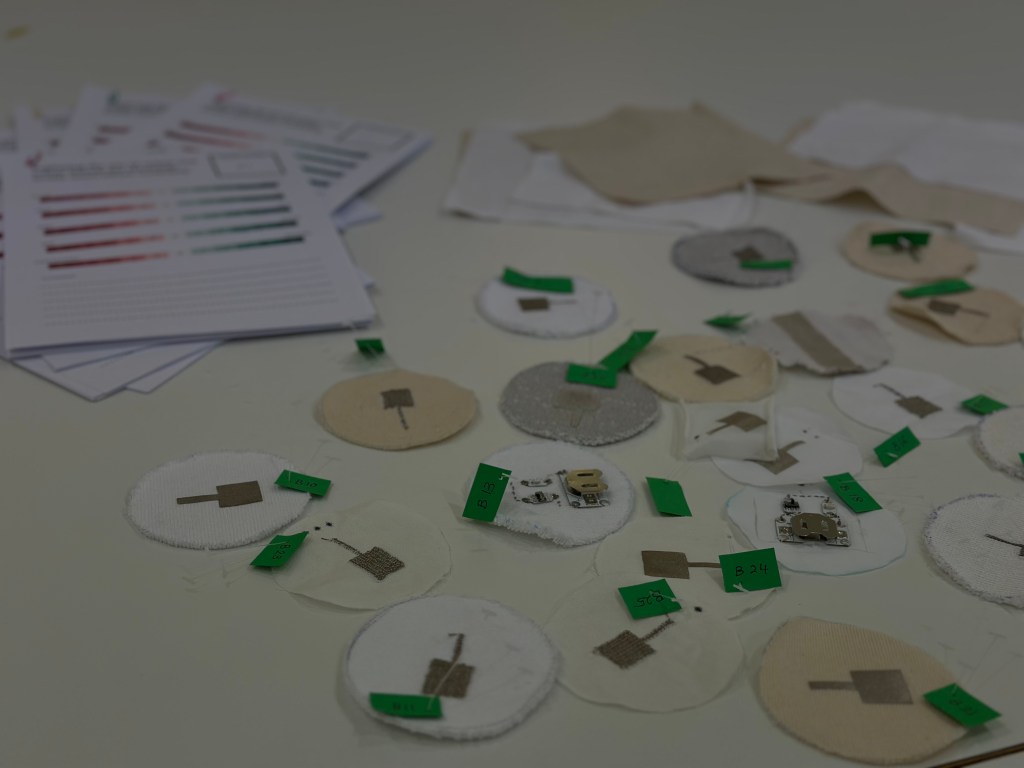
Picture of materials in advance of a workshop with users to understand their perceptions of different cotton-based textiles and E-textiles.
Which integration techniques will be employed?
Seven electronics integration techniques will be investigated covering a variety of key methods used in industry, by hobbyist, and in the academy: Screen-printing, embroidery, knitting, weaving, bonding, electronic yarn technology, and stitching.
What materials will you be using?
The project will investigate four types of cotton (Upland, Egyptian, Treen, Levant) and five cotton natural fibre blends (cotton-bamboo, cotton-linen, cotton-silk, cotton-hemp, cotton-viscous).
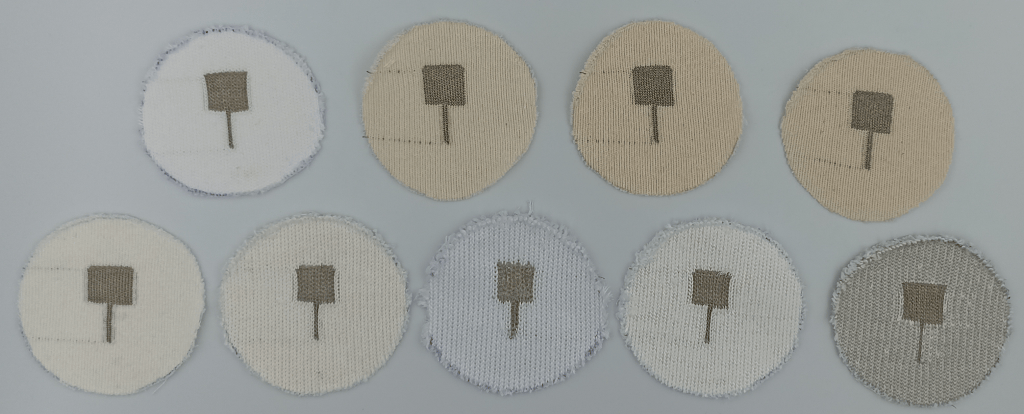
Knitted textile electrodes created using four different types of cotton base, and five cotton natural fibre blended textile bases.
Team
The core multidisciplinary team consists of Theo Hughes-Riley, Arash M. Shahidi, Yang Wei, Carlos Oliveira, Tharushi Peiris, and Tanvir Hossen, however other researchers will assist in specialist areas.
Outcomes
The website will be updated to report on key outcomes and activities.
Key results from the project will be presented as part of the E-Textiles Network Webinar series on the 11th November 2026. Details are available here.

